Packing and load
Packing to a weight limit without weighing twice
Weigh the empty case first, then build a weight budget item by item. The arithmetic that keeps a cabin bag under the cap and the hold bag under 50 lb.
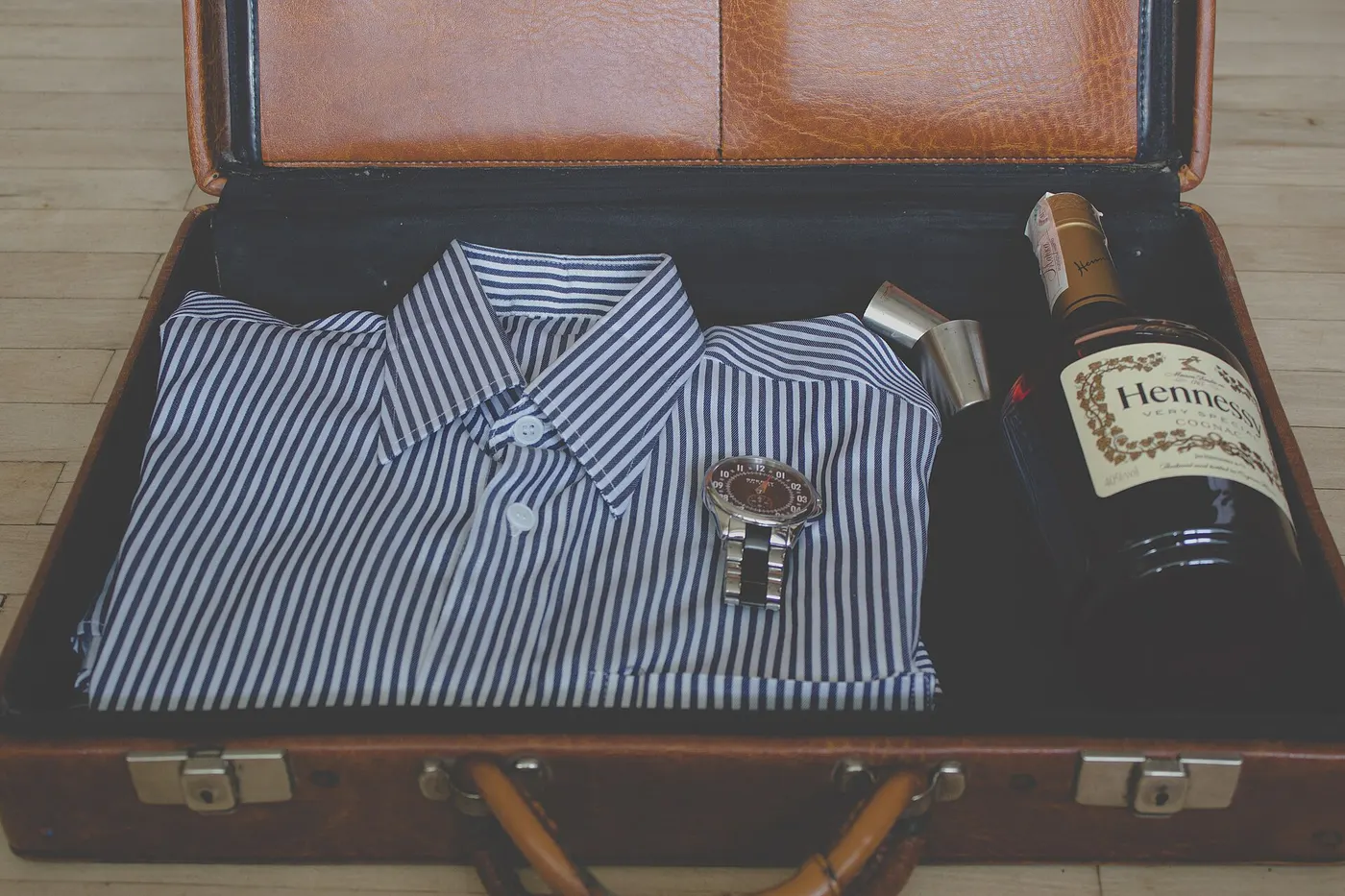
Repacking on an airport floor is a measurement failure, and it happens for one reason: the case was weighed full, late, and once. The fix is to weigh it empty, early, and build the load as a budget rather than a pile.
This guide gives you the three numbers that make up any weight limit, a worked example you can copy, and the two rules that constrain what goes where regardless of what the scale says. Example item weights below are labelled as examples; a kitchen scale and ten minutes will give you better ones.
Gross, tare and net: there are only three numbers
Gross is what the scale at the desk reads. Tare is the empty case. Net is everything you packed. Any weight cap is a cap on gross, which means the case spends part of your allowance on itself and you never see the charge.
The table below uses the same example empty weights as our buying guide, so the arithmetic is consistent across this site. A 5.5 lb soft cabin case under a 22 lb cap leaves 16.5 lb; a 7.5 lb hard-shell spinner leaves 14.5 lb, which is about 14% less. On a 50 lb checked cap, 8.5 lb leaves 41.5 lb against 11.0 lb leaving 39.0 lb, a gap of about 6%.
Weigh your own case rather than trusting any published figure, including ours. Stand on a bathroom scale, note the reading, pick the empty case up, note the second reading and subtract. Most domestic scales are good to about a pound, so treat the result as plus or minus 1 lb and keep a 2 lb margin against the cap.
| Case type | Example empty weight | Contents under a 22 lb cabin cap | Contents under a 50 lb checked cap |
|---|---|---|---|
| Soft-side cabin, 2 wheels | 5.5 lb | 16.5 lb | not applicable |
| Hard-shell cabin, 4 wheels | 7.5 lb | 14.5 lb | not applicable |
| Soft-side checked, 2 wheels | 8.5 lb | not applicable | 41.5 lb |
| Hard-shell checked, 4 wheels | 11.0 lb | not applicable | 39.0 lb |
Cap minus empty weight, nothing else. The pack-weight calculator on this site takes your measured empty weight and your own item list instead of these examples.
A weight budget you fill in before you pack
Clothes weigh more than people expect and shoes weigh more than clothes. The example weights below are ordinary figures for adult items, and the useful exercise is to weigh five of your own to find out how far off they are for you.
Here is a worked seven-night list, using the example weights: 7 shirts at 0.5 lb is 3.5 lb, 3 pairs of trousers at 1.5 lb is 4.5 lb, one sweater at 1.2 lb, two pairs of shoes at 2.0 lb is 4.0 lb, a toiletry kit at 2.0 lb and a laptop with charger at 4.0 lb. That totals 19.2 lb of contents.
In a 5.5 lb soft cabin case that is 24.7 lb gross, which is 2.7 lb over a 22 lb cap. In a 7.5 lb hard shell it is 26.7 lb, which is 4.7 lb over. The fix is not a smaller case; it is wearing the heavier pair of shoes and the sweater onto the aircraft, which removes 3.2 lb from the case and brings the soft-case total to 21.5 lb, half a pound inside the cap.
| Item | Quantity | Example unit weight | Subtotal |
|---|---|---|---|
| Shirts | 7 | 0.5 lb | 3.5 lb |
| Trousers | 3 | 1.5 lb | 4.5 lb |
| Sweater | 1 | 1.2 lb | 1.2 lb |
| Shoes, pairs | 2 | 2.0 lb | 4.0 lb |
| Toiletry kit | 1 | 2.0 lb | 2.0 lb |
| Laptop and charger | 1 | 4.0 lb | 4.0 lb |
| Contents total | 19.2 lb | ||
| Plus the empty case | 5.5 lb | 24.7 lb gross |
24.7 lb is 2.7 lb over a 22 lb cap. Wearing one pair of shoes and the sweater removes 3.2 lb and lands the case at 21.5 lb gross. Unit weights are examples; weigh your own.
Liquids are a volume rule, and they cost you weight anyway
The Transportation Security Administration limits liquids, aerosols, gels, creams and pastes to containers of 3.4 ounces, or 100 millilitres, each, carried in a single quart-sized bag, with medications and infant or child nourishment excepted. Nothing in that rule mentions weight, which is exactly why it catches people out.
Do the conversion once. Nine full 3.4 fluid ounce containers is 30.6 fluid ounces, and water weighs about 8.34 pounds per gallon, so a full quart bag of water-like liquids is close to 2.0 lb. That is roughly 12% of the 16.5 lb contents allowance in the soft cabin case above, spent on shampoo.
Solid bar versions of the same products remove the volume rule and most of the weight, and they also remove the part of the checkpoint where you kneel on the floor digging a bag out. Whatever you carry, the quart bag has to live in a pocket you can reach without opening the main compartment, because it comes out onto the belt.
- Containers are capped at 3.4 oz each; the cap is on the container, not on how full it is
- One quart-sized bag per traveller, and it comes out of the case at the checkpoint
- Medications and infant or child nourishment are excepted from the 3.4 oz limit
- A full quart bag of water-like liquids weighs close to 2.0 lb, about 12% of a 16.5 lb cabin contents allowance
- Anything over 3.4 oz belongs in the hold bag, which is a packing decision rather than a security one
Batteries ride with you, and that fixes part of the load
The Transportation Security Administration states that spare, uninstalled lithium ion and lithium metal batteries, including power banks and cell phone battery charging cases, must be carried in carry-on baggage only. For larger spares in the 101 to 160 Wh range, passengers may carry up to two with the airline's approval.
That turns a packing preference into a constraint. A power bank, spare camera batteries and a laptop battery pack cannot be moved into the hold bag to save cabin weight, so they go into the cabin budget first and everything else is packed around them.
A laptop and charger at an example 4.0 lb is already about a quarter of the 16.5 lb contents allowance in the soft cabin case. Add a power bank and two camera spares and the electronics are close to a third of it before any clothing. If the trip is a working one, start the budget with the electronics and fill the remainder, rather than the other way around.
Weigh once, at home, with a margin
Weigh the packed case the night before rather than the morning of, because the night before you can still take something out without a decision costing you a train. Use the bathroom scale subtraction method and treat the answer as plus or minus 1 lb.
Leave a 2 lb margin under the cap. Trips add weight: a bottle bought on the way, a jacket that goes into the case when the weather turns, paperwork, a gift. A case packed to exactly 22.0 lb at home is a case over the cap on the way back.
Write the empty weight of each case you own on its luggage tag in permanent ink. It takes thirty seconds once and it removes the first and most error-prone step every time afterwards. The pack-weight calculator on this site keeps the same figures between trips if you would rather not write on the tag.
- Weigh yourself, then yourself holding the empty case, and subtract to get the tare
- Subtract the tare from the cap to get your contents allowance and write it down
- Build the item list on paper or in the pack-weight calculator before anything goes in the case
- Move the two heaviest wearable items onto your body rather than into the case
- Weigh the packed case the night before, aiming 2 lb under the cap
- Write the empty weight on the luggage tag so you never repeat step one
Before you buy
- Weigh every empty case you own and write the figure on its luggage tag
- Subtract the empty weight from your carrier cap and treat the result as the real allowance
- Weigh your own shoes, outerwear and toiletry kit rather than using example figures for them
- List items and subtotals before packing, and total the column before anything goes in the case
- Move the two heaviest wearable items out of the case and onto your body
- Put the quart bag of liquids in a pocket you can open without unzipping the main compartment
- Pack power banks and spare lithium batteries in the cabin bag, and do it first
- Weigh the packed case the night before, 2 lb under the cap
Questions readers ask
- How accurate is the bathroom scale method?
- Good to about a pound on most domestic scales, which is why the method ends with a 2 lb margin rather than a precise number. Weigh twice and take the second reading; the first often differs because the scale is still settling. A hanging luggage scale is more repeatable but needs the same margin for the weather and the souvenirs.
- Which items are worth weighing myself?
- Shoes, outerwear and the toiletry kit, in that order. Those three are where the example figures above miss hardest, because a pair of boots can be double the 2.0 lb example and a jacket can weigh more than three shirts. Clothing in light fabrics is close enough to the example weights for planning.
- Does the quart bag count against the cabin weight cap?
- Yes. The cap is on the gross weight of what you bring aboard, and a full quart bag of water-like liquids is close to 2.0 lb, which is about 12% of a 16.5 lb contents allowance. The 3.4 oz and quart-bag limits are separate rules about volume and packaging, and they apply on top of the weight cap.
- Can I move a power bank into the checked bag if the cabin bag is overweight?
- No. The Transportation Security Administration requires spare, uninstalled lithium ion and lithium metal batteries, power banks and battery charging cases to travel in carry-on baggage only. If the cabin bag is over the cap, the weight has to come out of the clothing or go onto your body instead.
- What is a realistic contents weight for a week away?
- The worked example above comes to 19.2 lb for seven nights including a laptop, which fits a 50 lb checked cap easily and needs trimming by about 3 lb to fit a 22 lb cabin cap in a 5.5 lb case. Without the laptop the same list is 15.2 lb and fits the cabin case with room to spare.
Sources
- Transportation Security Administration — liquids rule, 3.4 ounces per container in one quart-sized bag, with exceptions — checked 2026-11-03
- Transportation Security Administration — lithium batteries over 100 watt hours, carry-on only and the two-spare limit — checked 2026-11-03
- Transportation Security Administration — travel FAQ, carry-on size and weight restrictions are set by the airline — checked 2026-11-03
Some links on this site can earn us a commission. That does not change which product a guide recommends, and it adds nothing to your price. Advertising is not enabled on this site yet. When it is, ads will be labelled and kept visually separate from the guides.