Budget and prices
What a suitcase actually costs per trip
Divide the price by trips rather than years, add repairs, bag fees and customs duty, and the cheap case is often the expensive one. Full arithmetic shown.
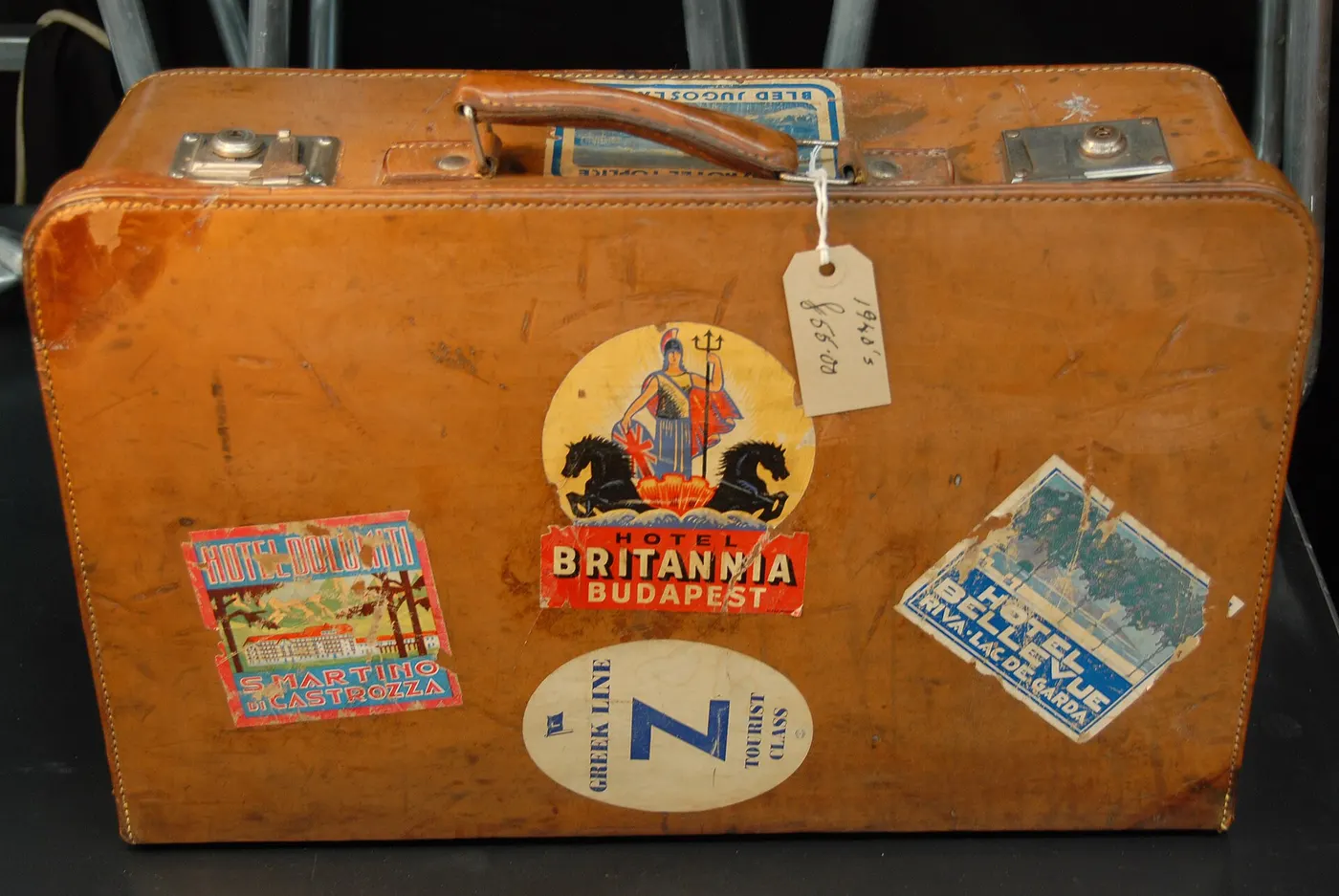
A suitcase price tag answers a question nobody asked. What you actually pay is the price divided by the trips you take with it, plus the repairs that keep it alive, plus the bag fees it triggers, plus anything customs adds if you bought it abroad.
This guide works through each of those in order with the arithmetic in front of you. Every price here is an example figure, said so in the same sentence, because this site has no price feed and quotes no seller.
Divide by trips, not by years
A case that sits in a cupboard for 11 months costs the same per year as one that flies monthly, and nothing like the same per trip. Trips is the denominator that matters, because that is the unit of service the case delivers.
At an example 4 trips a year, a $220 case kept 6 years covers 24 trips and costs about $9.17 each. The identical case replaced after 3 years covers 12 trips and costs about $18.33 each. The equipment did not change, only the number of trips it was asked to do.
This is why the question to ask in a shop is not whether $220 is a fair price but whether this particular case will still be rolling in year six. A bolted wheel housing, a handle with spare tubes available and a zip with a metal slider can reach that. A moulded wheel and a sealed handle rarely do, whatever the case cost.
| Case price | Kept 3 years, 12 trips | Kept 6 years, 24 trips | Kept 10 years, 40 trips |
|---|---|---|---|
| $90 | $7.50 | $3.75 | $2.25 |
| $220 | $18.33 | $9.17 | $5.50 |
| $450 | $37.50 | $18.75 | $11.25 |
Each cell is the price divided by 4 trips a year multiplied by the number of years, with no resale subtracted and no repairs added. The cost-per-use calculator on this site takes your own trip count.
Repairs are cheaper than replacement, when the parts exist
A wheel set at an example $18 and a handle assembly at an example $35 is a $53 repair. On the $220 case above, that repair is the difference between two outcomes you can compute exactly.
Replace the case at 3 years and buy another: $440 of cases over 24 trips, which is $18.33 a trip. Repair it once at 3 years and keep it to 6: $273 over the same 24 trips, which is $11.38 a trip. The repair route is about 38% cheaper per trip, and it is cheaper precisely because the denominator doubled.
The repair only exists if the parts do. That is a thing you can check before you buy rather than after you break something, and it is the single most useful minute of research in the whole purchase. A maker that publishes a parts list is telling you the case is meant to be kept.
- $220 case replaced at 3 years, twice over 6 years: $440 across 24 trips, about $18.33 a trip
- $220 case repaired once at 3 years for $53: $273 across 24 trips, about $11.38 a trip
- The repair saves about 38% per trip, and about $167 in cash over the 6 years
- A wheel set and a handle are the two parts that decide this; zips and shells almost never end a case first
Bag fees are usually the bigger line, and they are a formula
A checked bag fee is charged each way, so a round trip is two charges and a year of 4 round trips is 8 charges. At an example $40 a bag each way, that is $320 in a single year, which is more than the $220 case and more than ten years of its per-trip cost.
We quote no airline fee here, because fees differ by carrier, route, fare class and loyalty status and change without notice. The point is the multiplication rather than the rate: put your own carrier figure into the first row of the table and read off the annual number.
That arithmetic is why a cabin-only pattern changes the whole budget. Dropping from 4 checked round trips to 4 cabin-only ones removes the entire fee column, and a $220 cabin case that eliminates $320 a year of fees pays for itself inside the first nine months.
| Round trips a year | At $0 a bag each way | At $25 a bag each way | At $40 a bag each way | At $60 a bag each way |
|---|---|---|---|---|
| 2 round trips, 4 charges | $0 | $100 | $160 | $240 |
| 4 round trips, 8 charges | $0 | $200 | $320 | $480 |
| 8 round trips, 16 charges | $0 | $400 | $640 | $960 |
One checked bag per person per direction. The rates in the headings are illustrative figures chosen to show the shape of the cost, not fees we are quoting from any carrier.
Buying a case abroad: what customs adds
U.S. Customs and Border Protection publishes the exemption plainly. A returning resident may bring back goods under an $800 duty-free personal exemption every 31 days, having remained no less than 48 hours beyond the territorial limits of the United States, and a flat duty rate applies to dutiable articles above it, with 3 percent given as the rate for the next tranche in the usual case.
So the landed cost of a case bought abroad is a short sum. A $950 purchase sits $150 above the exemption, and at the 3 percent flat rate that is $4.50 of duty, for a landed cost of about $954.50 before anything your state adds. Sales tax in the United States is set by state and locality rather than nationally, so the final line depends on where the goods come to rest.
The exemption is per trip and per person subject to the 31-day and 48-hour conditions, which is why a family returning together often clears a purchase that one traveller would not. The landed-cost calculator on this site takes the purchase price, the exemption you qualify for and a duty rate, so you can see the real number before you pay rather than at the red channel.
| Purchase price abroad | Amount above the $800 exemption | Duty at 3 percent | Landed cost before state sales tax |
|---|---|---|---|
| $450 | $0 | $0.00 | $450.00 |
| $950 | $150 | $4.50 | $954.50 |
| $1,600 | $800 | $24.00 | $1,624.00 |
Assumes the traveller meets the 48-hour and 31-day conditions and has used no part of the exemption on other goods. Customs and Border Protection also describes a higher $1,600 exemption in specific circumstances and a flat 4 percent rate for certain origins.
What replacement will cost when the time comes
The replacement price is not today's price. The Bureau of Labor Statistics reported that the all items consumer price index for all urban consumers rose 3.7 percent over the 12 months to September 2026, before seasonal adjustment, and reported recreation up 2.8 percent over the same 12 months.
Carrying today's $220 example forward at 3.7 percent a year gives about $245 in three years and about $264 in five. That is not a forecast of what any particular case will cost, because luggage is not the all items basket; it is the order of magnitude you should budget for rather than assuming the price stands still.
Put against the repair arithmetic, the inflation line argues the same way the wheel set does. Spending $53 now to avoid spending about $245 in three years is a decision you can make with two numbers and a tape measure.
The whole guide collapses to one sentence worth writing on a note. Price divided by trips, plus repairs divided by the trips they buy, plus the annual bag fee from the multiplication above, is the real cost of travelling with a suitcase, and only the first of those three terms appears on the price tag. Put your own trips, your own carrier fee and your own purchase into the cost-per-use and landed-cost calculators on this site, change one line at a time, and the ranking stays the same in nearly every household: fees first, years kept second, purchase price third.
Before you buy
- Count the trips you took in the last 12 months and use that number as your divisor, not a hopeful one
- Write the price, the expected years and the trips a year on one line and do the division before you buy
- Look up the spare parts page for the model and price a wheel set and a handle while you are there
- Work out your own annual checked bag fee using the multiplication in the table above
- If you are buying abroad, add the purchase to anything else you are bringing back before applying the $800 exemption
- Record the purchase date so you know when the case reaches the year count you planned for
Questions readers ask
- Should I count resale value in the cost per trip?
- Yes, when there is any. Subtract what you would realistically get for the case from the price before dividing. A $450 case sold for $90 after 6 years costs $360 across 24 trips, which is $15.00 a trip rather than $18.75. Hard shells with intact wheels resell; soft cases with worn corners usually do not.
- Is an expensive case cheaper in the long run?
- Only if it lasts proportionally longer. The $450 example kept 10 years costs $11.25 a trip; the $90 example kept 10 years costs $2.25. The expensive case has to survive about five times as long as the cheap one just to draw level, so pay for parts availability rather than for finish.
- Does duty apply to a case I bought abroad and used on the trip?
- Customs and Border Protection applies the $800 personal exemption to goods you are bringing back, and a flat duty rate to dutiable articles above it. Using the case on the trip does not remove it from the declaration. Declare the purchase price you paid; the arithmetic above shows how small the duty usually is at these values.
- How many trips a year makes a second case worth buying?
- Roughly from the point where the second case removes a fee or a repack on most trips. At 6 or more trips a year, a second cabin case at $220 across 6 years of use is about $6.11 a trip, which is less than a single checked bag charge at the $25 example rate.
Sources
- U.S. Customs and Border Protection — customs duty information, $800 personal exemption every 31 days and the flat duty rate — checked 2026-11-03
- U.S. Bureau of Labor Statistics — Consumer Price Index news release, 12-month change to September 2026 — checked 2026-11-03
- Transportation Security Administration — travel FAQ, carry-on size dimensions vary by airline — checked 2026-11-03
Some links on this site can earn us a commission. That does not change which product a guide recommends, and it adds nothing to your price. Advertising is not enabled on this site yet. When it is, ads will be labelled and kept visually separate from the guides.